

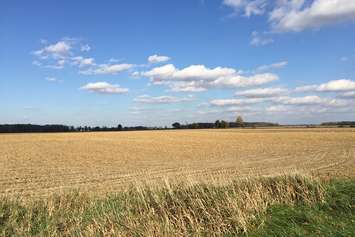
Farmland values across Canada continued to climb in 2025, but growth in Ontario (including parts of midwestern Ontario) showed signs of slowing as buyers became more selective.
A new report from Farm Credit Canada shows national farmland values rose by an average of 9.3 per cent last year, extending what it calls a "more than three-decade-long upward trend." The agency says the market has remained resilient despite economic pressures, noting producers continue to expand and compete for limited land.
"Over the past year, the Canadian farmland market remained resilient, defying expectations," the report states, adding that demand continues to be supported by "tight supply and strong competition among expansion-focused producers."
Here in Ontario, however, growth was much more modest. Farmland values increased by just 2.2 per cent in 2025, a significant slowdown from gains seen in previous years.
The report points to a noticeable shift in how farmers are buying land, saying "buyers have become increasingly particular, paying strong prices for high-quality cultivated land while avoiding marginal properties."
That trend is especially relevant in Huron, Perth, Grey, Bruce and Wellington counties, where values still rose, but at a measured pace. The region recorded a 5.9 per cent increase, the second-highest in the province.
Even so, FCC notes the dynamics are changing. "Purchases were less reactive, as established players were making deliberate, well-considered acquisitions," the report says.
Closer to home, that means fewer bidding wars on lower-quality farms, and more focus on productivity, tile drainage, and proximity to existing operations.
Across southwestern Ontario, including some of the province’s highest-value farmland, prices have largely levelled off. The report says regions like the southwest and central west “continued to feature the highest cultivated farmland values,” but adds that “cultivated land prices largely plateaued, and buyers were selective, paying premiums primarily for high-quality parcels.”
There were also signs of strain from weather conditions. In parts of Ontario, including eastern areas, drought led to crop losses and slowed land sales activity. FCC says some buyers stepped back from the market after difficult growing conditions, while others focused only on top-tier land.
Despite the slower growth, farmland demand remains strong overall. Nationally, FCC says ongoing succession challenges, urban pressure, and long-term investment appeal continue to support prices.
But the report also warns producers to stay cautious in a changing economic environment.
"Market conditions can change rapidly, which can impact land values," FCC notes, adding that farmers should maintain risk management plans to handle swings in commodity prices, yields and interest rates.
For producers across midwestern Ontario, the message is clear: farmland is still gaining value, but the days of across-the-board price surges appear to be giving way to a more careful, quality-driven market.