

A new report by the Association of Municipalities of Ontario says the province's homelessness crisis shows no sign of slowing down despite an increase in funding and expanded services.
The crisis stems from decades of underinvestment in deeply affordable housing, income support, and mental health and addictions treatment, combined with escalating economic pressures on municipalities.
Last year, 84,973 Ontarians experienced homelessness, up 7.8 per cent from 2024. That's an increase of 6,171 people. The Municipalities Under Pressure report says the figure is expected to double by 2035 to 170,000 residents.
Between 2016 and 2020, homelessness grew by 6.3 per cent, but between 2021 and 2025, the number rose by 49.1 per cent.
Spending to alleviate the crisis rose 11 per cent from 2024 to 2025. It increased from $2.04-billion to $2.3-billion, and most of that funding went to emergency shelters and supportive housing.
"No one in Ontario should accept the scale and scope of homelessness described in this report," said AMO President Robin Jones. "Our 2025 report made it clear that homelessness would only get worse unless we tackled the root causes. The situation today is even more dire. Since last January, there are 5,000 more Ontarians who are homeless. More at risk, given the economic uncertainty. Our social safety net is at its breaking point, and only a joint effort by all levels of government can save it."
Recent provincial and federal investments are a good start, says the AMO, but municipal property tax revenue is not a sustainable way to pay for housing and homelessness programs.
"We need the provincial government to lead with meaningful action, supported by federal investment, to protect individuals, communities, and our collective prosperity," added Jones. "We can solve this crisis, but we need to work together."
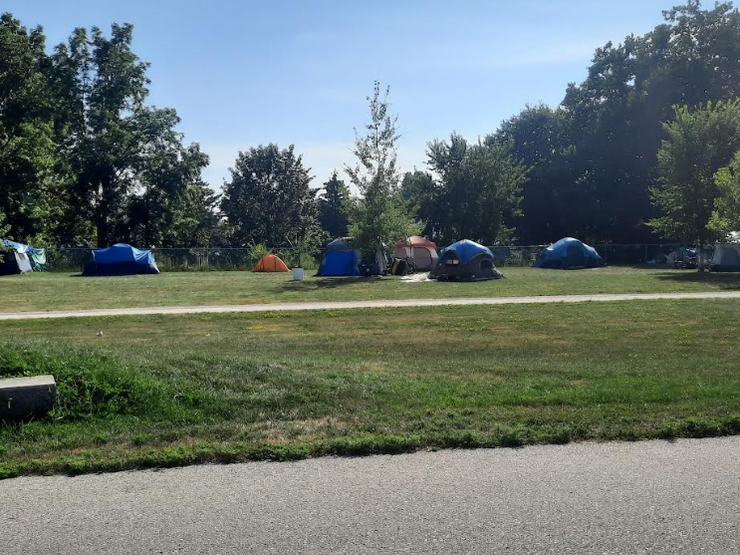
The report counted 2,000 homelessness encampments across Ontario, showing up in most areas of the province.
Seen in the past as an urban problem, homelessness is growing in rural and northern communities too. While Northern Ontario has just five per cent of the province's population, homelessness accounted for ten per cent of the total count. It grew 37.3 per cent in the north and 31.1 per cent in rural municipalities.
Meanwhile, there are now 301,340 households on a wait list for community housing who wait on average 65 months for a home. In some areas, the wait is up to 16 years.
The AMO is calling for $11-billion over ten years, and $2-billion to address acute pressures.
"Temporary fixes and enforcement will not solve the problem," said the AMO. "The AMO urges provincial and federal governments to take significant, long-term action on affordable housing, mental health and addiction services, and income supports to fix homelessness, improve local economies, and improve quality of life for all Ontarians."