
The Northern Tornadoes Project has marked an important milestone during its 2026 season.
Western University's Canadian Severe Storms Laboratory Director Gregory Kopp said the discovery wasn't observed right away.
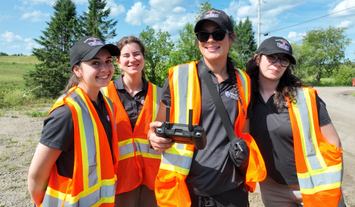
"We realized only in retrospect that we had sent out all female damage survey crews for four tornadoes," said Kopp. "We've been doing damage surveys for a long time and Northern Tornadoes Project was set up in 2017, but we realized 'oh, it's the first time we've just sent out all women.'"
The all-female crews were led by trailblazing graduate students; Anij Sparenberg and Hailey Durham.
Kopp said they've focused on having gender balanced groups for several years, so this really shows how far women have come in STEM fields.
"We don't have it yet at the staffing levels, but within our intern program we have about 25 interns every summer, we have 10 or 12 graduate students, and we've managed to achieve 50/50 at that level. So, we're really proud of that actually," Kopp said.
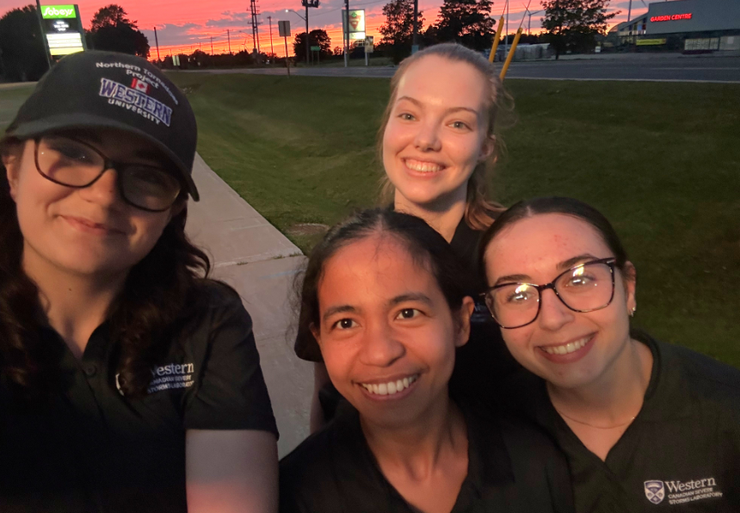
Undergraduate students from any Canadian University or program are eligible to apply to the interns program.
"So, we have students from all across the country," Kopp said. "About one third are from Western and the rest are from other universities. About a third are engineers, about a third are meteorologists, and the others are in other disciplines. A lot of them are in geography."
He said it has been difficult to draw females into engineering and meteorology programs.
"Engineers across the country in undergraduate programs are about 25 to 28 per cent and it seems kind of stuck there, and meteorology is the same and so it's been a challenge," Kopp said.
But, he said there are still a lot of people interested in storms.
"I don't think your gender matters for that, and so we've been able to attract a good balance in our team," said Kopp.
He said the passion to study storms has really made the group successful.
"When we first started, we were much smaller," Kopp said. "Our first staff member was female and we used graduate students that were in my research group and they did the surveys. As we grew and moved in 2019 to doing the whole country, we had to hire more and we had seven or eight. In 2022, we were in the 20 [person] range with our team."
Kopp said coverage about the project has led to an increase in applications.
"This past year, we had 270 applicants for the 25 positions," he said. "So, it's really competitive to get one of our internships."