

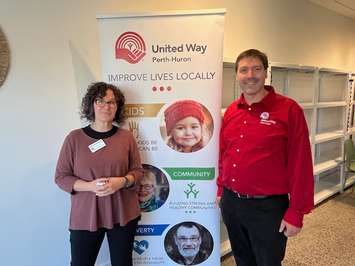
The United Way Perth Huron recently published a new research paper detailing how current homeless shelters don't adequately solve homelessness.
United Housing published the report, and United Housing Director Kathy Vassilakos says more permanent housing options under the Housing First program, which has been used in the UK and places like Finland, cost more upfront to build the housing, but the long-term benefits are huge.
"The benefits accrue over time and very quickly you get a return on your investment where you're actually saving the system money and that actually happens quite quickly," Vassilakos stated. "Not only is it less expensive in the long run to do this thing, it's also more effective. In other words, the people you are helping are actually helped, and there's that human dignity and human rights perspective on housing, as well."
The paper, titled "The Social and Financial Cost of Non‑Permanent Shelter Systems for Addressing Homelessness," written by United Housing Director Kathy Vassilakos and research intern, Maria Erb, says a 2024 study showed that the Housing First pilot generated an average of nearly $30,000 per year per person in benefits to both individuals and the larger system in the UK.
Additionally, the paper shows that Finland reported savings of $64.4 million Canadian during the first 12 years of its Housing First program. Vassilakos says the report also shows that in 2024, more than 81,500 people experienced homelessness in Ontario. That represented a 25 per cent increase over 2022 numbers, and over half were classified as chronically homeless. It's also important to know that the issue is becoming more common in rural areas, not just cities.
"Traditionally, homelessness is thought of as a big city problem. But what that report showed, with over 81,000 people (being homeless), it actually demonstrated that homelessness is rising twice as fast in rural and remote areas of Ontario than it is in cities or municipalities. So the first thing is to understand that it's a challenge everywhere," said Vassilakos.
Vassilakos says the research demonstrates that with less reliance on ineffective temporary shelters, the Housing First program actually allowed people to get settled and receive help and get on their feet. In order to make something similar happen here, it would require effort from a number of different areas.
"It will require all levels of government. It will require non-profit agencies across a wide range of community services and it will need to be coordinated. So it's not just how much money are we going to spend, it's also how we're going to spend that money and how we allocate it," Vassilakos pointed out.
The paper shared that locally, non-profit agencies in Stratford provided support services to 734 people in 2025. 39 individuals were unable to secure housing due to a lack of available units, and an additional 28 required fully supported housing. In July 2025, at least 148 households in Huron County were experiencing homelessness, with 126 classified as chronic. Similar patterns were seen in June 2025 across Stratford, St. Marys and Perth County, where 144 households were experiencing homelessness and 131 were considered chronic.
"In the end, investing in permanent housing instead of creating costly and ineffective temporary systems is the only evidence-based solution to the challenges we face around homelessness," added Vassilakos. "We understand that for certain groups, including women escaping intimate partner violence and vulnerable youth, there remains a need for emergency shelters so it’s not a matter of dismissing them completely. But if we keep investing in temporary fixes, we risk losing an opportunity to build long-term solutions. We need to shift our thinking toward making sure people who need housing get it and can keep it for years to come."
Visit unitedhousingperthhuron.ca for more details.