
As more people head outdoors in Grey-Bruce this summer, public health officials are warning that tick season is here, and with it, an increased risk of Lyme disease and other tick-borne illnesses.
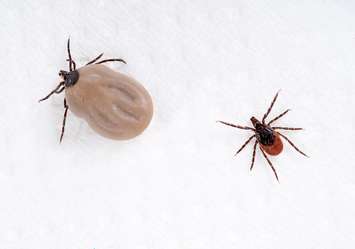
Grey Bruce Public Health says a significant portion of Midwestern Ontario is considered an established risk area for blacklegged ticks, the species that can carry Lyme disease, anaplasmosis, babesiosis, and Powassan virus. However, officials stress that ticks can now be found across Ontario.
"Ticks are now active for longer periods each year, including in the early spring and into the late fall, and their habitat has expanded," says Public Health Manager Gillian Jordan. "This is why it’s important for people to be tick aware whenever they spend time outdoors."
The province is echoing that message. Ontario.ca notes that blacklegged ticks are continuing to spread and can survive whenever temperatures remain above freezing. The province says while risk is higher in wooded and grassy areas, "it is possible to find an infected tick almost anywhere in Ontario."
Health officials say prevention is the best protection. Grey Bruce Public Health is urging residents to use bug spray containing DEET or Icaridin, wear long clothing, and stick to cleared trails when hiking or spending time in nature.
Jordan says simple habits after coming indoors can also make a difference.
"Public Health recommends people check themselves, their family members, and pets for ticks after spending time outdoors," she says. "Promptly removing any attached ticks is critical to preventing potential infection."
Officials say ticks typically need to be attached for 24 to 36 hours to transmit the bacteria that causes Lyme disease, making quick checks and removal especially important.
The province adds that ticks should be removed carefully with fine-tipped tweezers, pulling straight out without twisting or crushing the insect.
Ontario.ca also advises people to reduce risk by wearing light-coloured clothing to spot ticks more easily, drying clothes on high heat after being outdoors, and performing full-body checks, especially behind knees, underarms, and around the waistline.
Tick activity is already having an impact on public health numbers. Grey Bruce Public Health notes about 3,115 cases of Lyme disease were reported in Ontario in 2025, a 33 per cent increase from the year before, with nearly 200 cases already recorded this year.
Early symptoms can include fever, fatigue, headache, muscle and joint pain, and a distinctive bullseye rash. If left untreated, Lyme disease can lead to long-term complications including recurring arthritis, neurological issues, numbness, or paralysis.
Health officials say early treatment is highly effective.
"If caught early, Lyme disease can be treated effectively with antibiotics," Grey Bruce Public Health says.
Officials are also reminding residents that ticks can carry other diseases as well, including anaplasmosis, babesiosis, and Powassan virus, some of which can cause severe illness.
Residents are being encouraged to use the free eTick platform for tick identification and to contact a healthcare provider if symptoms develop after a possible tick bite.